Isopropyl Alcohol

Product images are for reference only and may vary from the actual product.

Isopropyl Alcohol

IHC Compatible

In Stock

Share Now :
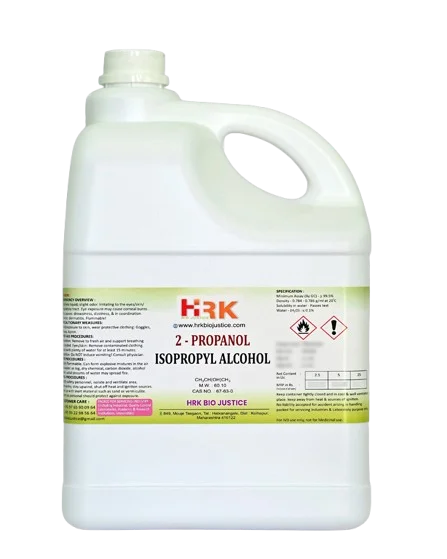
  • This is a specially formulated, high-purity dehydrating agent designed for modern histopathology where morphology, IHC antigenicity, and molecular integrity must be preserved. Unlike standard industrial alcohol, it is purified, methanol-free, low-aldehyde, and validated for immunohistochemistry.
  • It is the most popular and widely used dehydrating agent in histology – proven to replace water gradually without distortion of delicate cells.
  • It uses approved IHC-safe denaturants that do not interfere with epitope binding. It provides the exact dehydrating properties of absolute ethanol while being cost-effective and regulatory compliant.
  • It is completely miscible with water and xylene substitutes, allowing seamless transition from fixation to paraffin infiltration.
  • IHC & Molecular Validated: Low aldehyde <5 ppm, no methanol, preserves antigenicity for LH, GM130, TGN38, and routine markers, plus nucleic acid stability
  • Optimal Dehydration: Dehydrates rapidly without considerable shrinkage, no excessive hardening, no removal of stains
  • High Purity: 99.9% v/v ,filtered at 0.2 micron, moisture <0.1%
  • Universal Compatibility: Works with all automated tissue processors
  • Cost-Effective: Cheaper than absolute ethanol, ready-to-use
  • Safe Denaturant System: No methanol toxicity, non-carcinogenic, pleasant odor profile
In Tissue Processing

  • Step 1: Graded Dehydration :
    1. Fixed tissue contains free and bound water. Alcohol removes it by graded substitution: 70% → 80% → 95% → 100% → 100%. Starting with moderate concentration prevents rapid water removal which can distort delicate cells. Agitation + gentle heat in tissue processors makes it less viscous and increases penetration.
  • Step 2: Antigen Preservation :
    1. Unlike cross-linking fixatives, alcohol preserve cells through dehydration and protein precipitation. It does NOT mask epitopes.
  • Step 3: Clearing Transition :
    1. After dehydration, this Alcohol is completely displaced by clearing agents (Xylene / Xylene-free). It leaves no water trace, preventing opaque, poorly infiltrated, hard-to-section blocks.
  • For Pathologists: Excellent nuclear detail, minimal shrinkage artefacts, no holes/tearing during microtomy, transparent blocks after clearing.
  • For IHC Lab: Superior HIER response, strong specific staining intensity, reduced background, works for both polymer and biotin systems.
  • For Technologists: Faster processing, excellent ribboning, compatible with same-day biopsy protocols.
  • For Lab Managers: One reagent for entire dehydration series, long bath life with anhydrous copper sulfate indicator system, low fire hazard compared to methanol.
  • Other Compatible Laboratory Uses as Solvent
    1. 1. Slide Staining & Coverslipping : Dehydration after H&E, Pap, and Special stains before xylene & mounting.
      2. Cytology & Smear Fixation: Ideal fixative for cytologic smears, FNAC, endometrial sampling – fast acting, excellent nuclear preservation.
      3.General Lab Solvent: DNA/RNA precipitation, cleaning solvent for labware, disinfectant (70% grade), solvent for lipid-soluble dyes.
      4. Microbiology: Gram staining decolorizer, surface sterilization.
      5. Plant & Veterinary Histology: Dehydration of lightly chitinized arthropods and rodent tissues.

Related products

Recently Viewed Products

Scroll to Top

Where Histology meets certainty ….!

Office Address

849, Mouje Tasgaon,
Tal. Hatkanangale,
Dist. Kolhapur - 416122
Maharashtra, India.

phone number

+91 927 033 6969